How to Teach Someone With Dyslexia to Read: 7 Tips
Teaching someone with dyslexia to read may require more explicit instruction, repetition, practice, and patience—but children and adults with dyslexia absolutely can become successful readers.
If you’re wondering how to teach someone with dyslexia to read, focus on building strong foundational reading skills step-by-step. Phonological and phonemic awareness, letter-sound relationships, decoding, word recognition, fluency, vocabulary, and comprehension all play important roles.
Most importantly, don’t let reading instruction become a daily source of defeat. A struggling reader needs effective instruction, but they also need opportunities to experience success and develop confidence.
Here are some practical ways you can help.

Get the Right Reading Support
If a child is consistently struggling to learn to read, don’t assume they simply need to try harder.
Children with dyslexia often benefit from explicit, systematic instruction and plenty of opportunities to practice foundational reading skills.
If you’re a parent, work with your child’s teacher, reading specialist, special education team, or another qualified professional to understand where your child is struggling and what instruction or accommodations may help.
Extra support isn’t a sign that your child has failed. It’s about finding instruction that meets the learner where they are.
Build Phonological and Phonemic Awareness
Strong awareness of the sounds in spoken language is an important foundation for learning to read.
Start with listening activities that help the learner notice and manipulate sounds. Depending on their skill level, you might practice:
- Recognizing rhyming words
- Breaking words into syllables
- Identifying the first or last sound in a word
- Blending individual sounds into a word
- Segmenting a word into its individual sounds
- Adding, removing, or changing sounds to make new words
For example, ask the learner to blend the sounds /m/ /a/ /p/ and identify the word map.
These activities can initially be done orally. Then connect those sounds to printed letters as you begin working on phonics and decoding.
Teach Phonics Explicitly and Step-by-Step
Phonics helps readers understand how written letters and letter combinations represent the sounds in spoken language.
Rather than expecting a struggling reader to figure out these patterns independently, teach them directly and provide plenty of guided practice.
Begin with the letter-sound relationships the learner needs, then gradually work toward blending sounds into words, short and long vowel patterns, digraphs, word families, and increasingly complex spelling patterns.
When the learner encounters an unfamiliar word, encourage them to look carefully at the letters and use what they know about sounds and spelling patterns to decode it.
As these skills become stronger and more automatic, reading becomes easier and more fluent.
Multisensory Techniques
Multisensory activities can make practice engaging and give learners another way to reinforce what they’re learning. A child might say a sound while writing the corresponding letter, build words with magnetic letters, trace letters while saying their sounds, or manipulate letter tiles to change one word into another.
Protect the Reader’s Confidence
Imagine struggling every day with something that seems to come easily to everyone around you.
That’s the experience many struggling readers have at school.
That’s why confidence matters so much in our approach to reading instruction.
Give the learner opportunities to read material that is within reach. Celebrate progress that may seem small—a newly recognized word, a successfully blended word, a sentence read independently, or simply sticking with a difficult lesson.
At the same time, don’t confuse encouragement with avoiding challenging skills. We want to provide appropriate instruction and practice while giving the learner enough success to think:
“I can learn to do this.”
Confidence doesn’t replace effective reading instruction. It helps a learner stay engaged long enough for that instruction to work.
Communicate with Your Child
When it comes to dyslexia and your child, communication is a big one. They may not understand WHY they are suffering with reading. Honestly, it’s hard for the adult and the child to understand when someone struggles with reading due to dyslexia.
The best thing you can do is communicate with your child and the teachers. You are their biggest advocate, so don’t give up. Them learning how to read is a big deal.
Keep the Program Rigorous
I think it’s important to note that dyslexia is hard to understand. One thing that is understood is that once progress is being made, you don’t want to delay the process. Stay encouraged, but also keep the program rigorous. You don’t want to study for a few weeks and then slacking off. You want to keep the progress moving forward as possible.
Teaching a child or someone with dyslexia how to read is not a walk in the park. There are long days and moments associated with this process. I’d love to hear your tips on how you have taught someone how to read with dyslexia?
Try Free Reading Lessons With Reading Patch
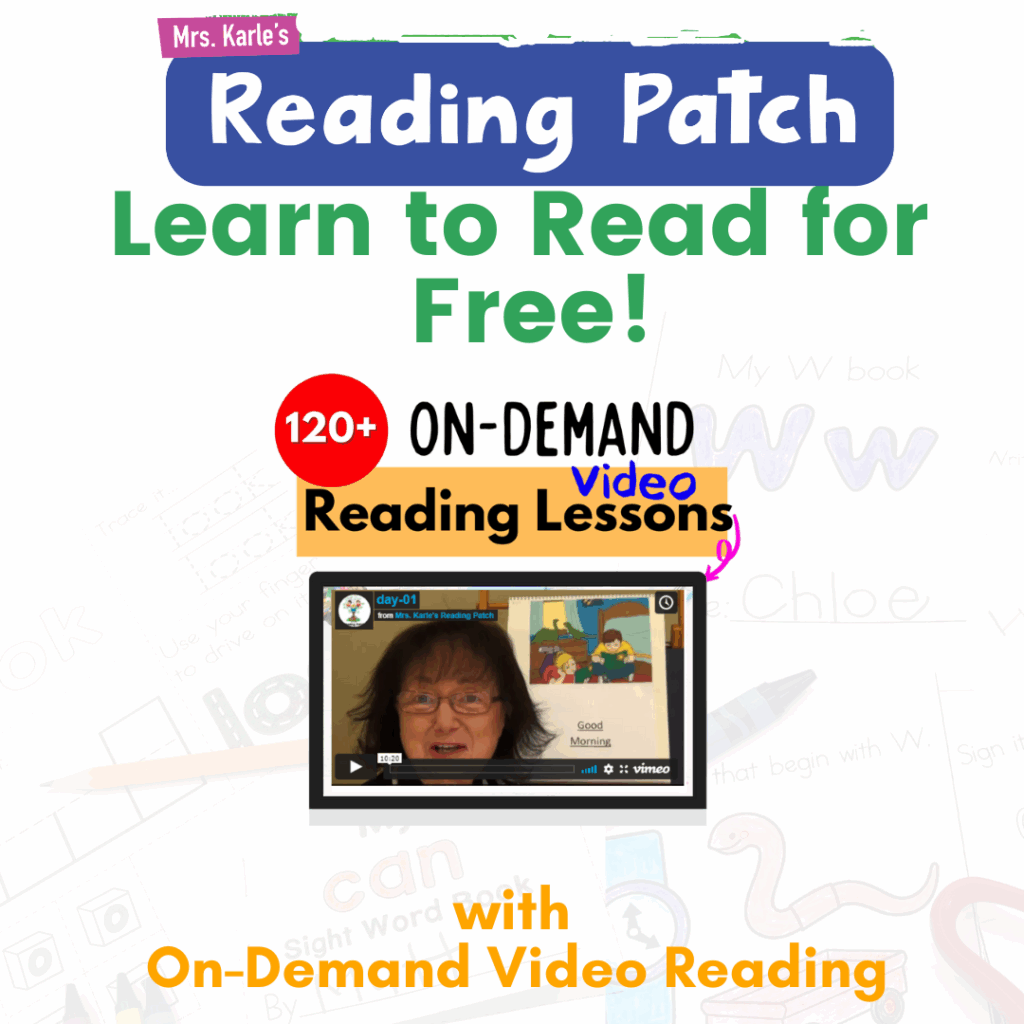
If you’re helping a struggling reader and need additional structured reading practice, you can also try the Reading Patch Learn to Read Program completely FREE.
The program was developed by Mrs. Karle, a master first-grade reading teacher with more than 30 years of classroom experience helping beginning and struggling readers.
Lessons include practice with:
- Letter sounds and phonics
- High-frequency words
- Word building and word ladders
- Reading fluency
- Vocabulary
- Comprehension
- Printable practice activities
Reading Patch is designed for beginning and struggling readers, but it is not a replacement for individualized dyslexia evaluation, intervention, or professional support when those services are needed.
Instead, think of our free lessons as another resource you can use to provide structured reading instruction and practice while helping your learner build confidence.
→ Start the Complete Reading Patch Learn to Read Program FREE